
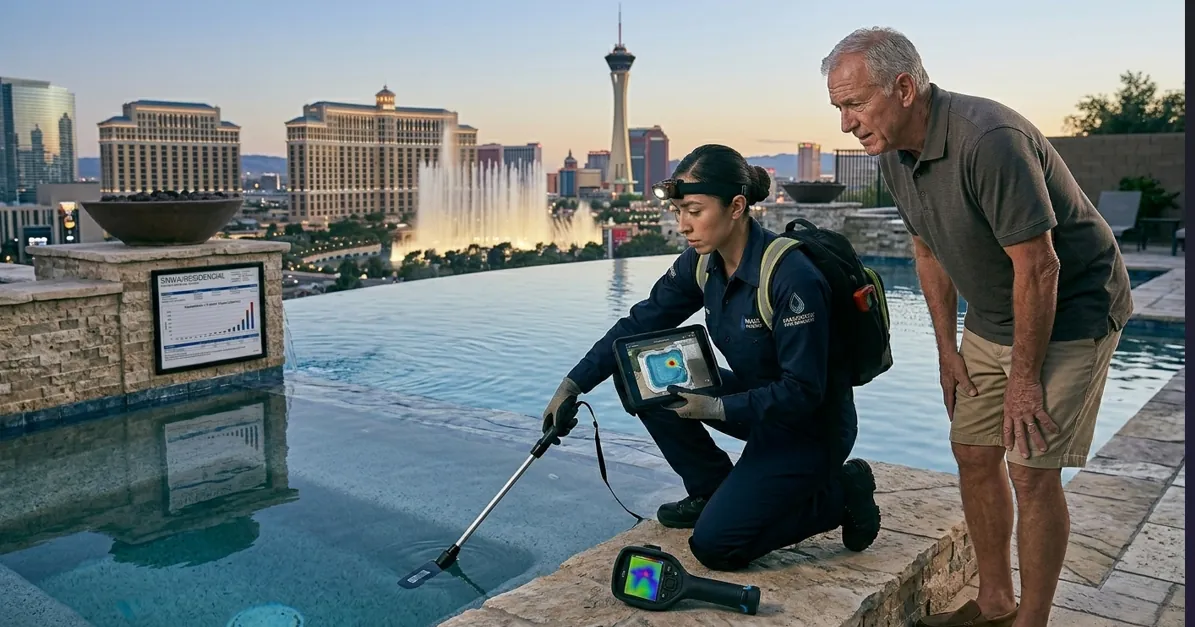
As a pool owner in Las Vegas, you might occasionally notice your pool losing water. It can be challenging to determine whether this loss is due to evaporation or a more serious issue like a leak. In this article, we'll explore the signs of a pool leak, how to measure evaporation rates, and what steps to take if you suspect a leak.
Understanding the difference between evaporation and a leak is crucial for maintaining your pool's health and ensuring you don't incur unnecessary repair costs.
Understanding Pool Water Loss
Water loss in pools can happen for various reasons. In Las Vegas, the hot climate plays a significant role in how quickly water evaporates. On average, pools can lose about 1/4 to 1/2 inch of water per week due to evaporation alone. However, if you notice a more significant drop, it might be time to investigate further.
Signs of a Pool Leak
There are several indicators that your pool may be leaking:
- Unexplained Water Loss: If your pool loses more than 1 inch of water per week, it could indicate a leak.
- Wet Spots Around the Pool: Puddles or wet areas near the pool's edge can signal a leak.
- Increased Water Bills: A sudden spike in your water bill may suggest that water is escaping from your pool.
- Cracked or Damaged Tiles: Visible damage can indicate water loss and should be addressed.
If you notice any of these signs, you should consider professional Pool Leak Detection in Las Vegas to pinpoint the issue.
Understanding Evaporation Rates
Evaporation rates can vary due to several factors:
- Temperature: Higher temperatures increase evaporation rates.
- Humidity: Lower humidity levels can lead to more significant water loss.
- Wind Speed: Wind can accelerate evaporation.
- Pool Surface Area: Larger pools lose more water to evaporation.
In Las Vegas, the average temperature can reach over 100°F in the summer, significantly increasing evaporation rates. Understanding these factors can help you gauge whether your pool's water loss is typical or concerning.
Testing for a Leak
To determine if your pool is leaking, you can perform a simple bucket test:
- Fill a bucket with water and mark the water level.
- Place the bucket on the pool step, ensuring it's submerged halfway.
- After 24 hours, compare the water levels in the bucket and the pool.
If the pool water level drops significantly more than the bucket, it's likely you have a leak. In this case, you should reach out for Water Leak Detection in Las Vegas to get professional assistance.
Common Mistakes to Avoid
When assessing your pool for leaks, avoid these common mistakes:
- Ignoring Small Changes: Even minor water loss can indicate a significant problem.
- Not Considering Weather Factors: Always account for evaporation due to weather conditions.
- Delaying Repairs: Addressing leaks promptly can prevent costly repairs down the line.
When to Call a Professional
If you suspect a leak and cannot find the source, it's best to contact a professional service. Las Vegas Leak Detection Pros specializes in identifying and repairing pool leaks. Our experienced team uses advanced technology to locate leaks without damaging your pool.
Frequently Asked Questions
How can I tell if my pool is leaking? You can tell by performing a bucket test, looking for wet spots around the pool, and monitoring water loss rates.
What is the average evaporation rate for pools in Las Vegas? Pools can lose about 1/4 to 1/2 inch of water per week due to evaporation, depending on weather conditions.
How much does pool leak detection cost? The cost for pool leak detection services in Las Vegas typically ranges from $100 to $300, depending on the complexity of the issue.
Can I fix a pool leak myself? While minor repairs can sometimes be done by homeowners, it's recommended to consult professionals for accurate leak detection and repair.
What should I do if I find a leak? If you confirm a leak, contact a professional service like Pool Leak Detection in Las Vegas to address the issue quickly.